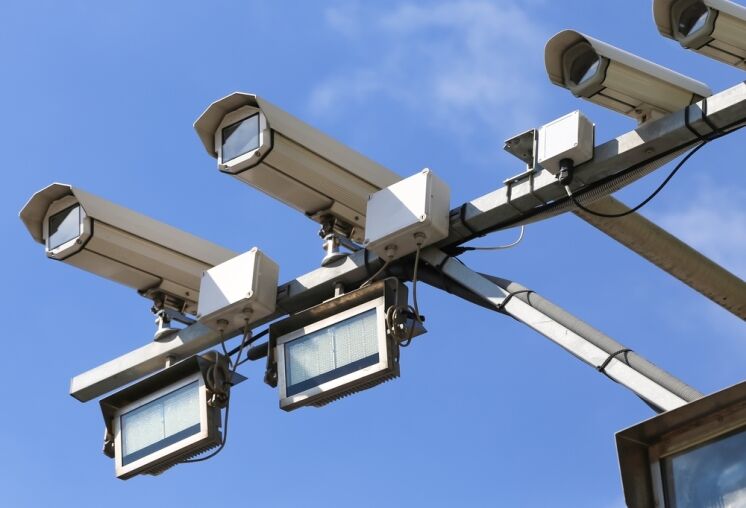
Traffic camera footage might make a pedestrian accident case in Palm Beach County stronger, but only if the right type of camera recorded the incident and the footage is preserved in time.
A pedestrian injury lawyer in Pembroke Pines familiar with South Florida's camera systems and evidence preservation laws can identify which recordings may exist and act quickly to secure them before they are overwritten or deleted.
That urgency matters more than most people realize. Our team has seen firsthand how quickly critical footage disappears in South Florida pedestrian cases. Many of the traffic cameras visible at Palm Beach County intersections are live-stream monitors that do not store footage. Pedestrian injury lawyers in Loxahatchee can help evaluate available evidence and explain your legal options after a pedestrian accident.
Meanwhile, private surveillance cameras, doorbell systems, and dashcams often do record, but their footage may be erased within days. The window between an accident and the permanent loss of video evidence is often measured in hours, not weeks.
Knowing which cameras record, who controls the footage, and how to preserve it under Florida law may be the difference between a claim built on strong visual proof and one that relies on conflicting witness accounts alone. A pedestrian accident law firm serving Indiantown can help assess evidence such as traffic camera footage when investigating how a pedestrian crash occurred.
What to Know About Traffic Camera Footage in Pedestrian Accident Cases
- Most government traffic cameras do not record: The Florida Department of Transportation and Palm Beach County both operate live-feed traffic cameras that typically do not archive footage, making them unreliable sources of accident evidence.
- Private cameras are often more useful: Business surveillance systems, residential doorbell cameras, and vehicle dashcams are more likely to have stored recordings of a pedestrian accident.
- Footage disappears fast: Many commercial surveillance systems overwrite recordings within 24 to 72 hours, and some cycle even faster, making immediate action critical.
- A preservation letter may trigger a legal duty to save evidence: Under Florida law, sending a written request to a business or property owner to retain footage may create an obligation to preserve it and open the door to spoliation penalties if it is destroyed.
- Digital evidence can establish fault and counter false narratives: Video footage may show whether a driver ran a red light, was distracted, failed to yield at a crosswalk, or was speeding before striking a pedestrian.
A Florida pedestrian accident attorney can identify nearby cameras, send preservation notices, and take the legal steps needed to secure footage before it vanishes.
Why Traffic Cameras in Palm Beach County May Not Have What Families Expect
Most traffic cameras in Palm Beach County do not record footage. However, private cameras—such as business surveillance, doorbell cameras, and dashcams—may capture an accident.
In 2024, Florida recorded 701 pedestrian fatalities, accounting for more than 22 percent of all traffic deaths statewide. Palm Beach County consistently ranks among the state's highest-volume counties for pedestrian crashes. With those numbers, families often assume that camera footage of their loved one's accident exists somewhere. That assumption is often wrong.
FDOT and County Cameras Are Typically Live-Only
The Florida Department of Transportation operates traffic cameras along I-95, the Florida Turnpike, and other major corridors through its FL511 system. These cameras stream live video to help transportation officials monitor traffic flow and adjust signal timing. Palm Beach County's own traffic camera system states directly on its website that its cameras are "live only and not recorded."
That means even if a pedestrian accident occurred directly in front of one of these cameras, no stored footage may exist to retrieve.
Red Light Cameras Capture Only Specific Violations
Some Palm Beach County municipalities operate red light cameras at select intersections. These cameras activate only when a vehicle enters an intersection after the signal has turned red. If the collision occurred during a green light phase or at an intersection without a red light camera, this source of footage may not apply.
The Gap Between Perception and Reality
The disconnect between what people see at an intersection and what was actually recorded is one of the most common challenges in pedestrian accident cases across South Florida. Understanding that gap early may help families and their attorneys focus their efforts on the sources of video evidence that are more likely to exist.
Where Useful Footage Actually Comes From
While government traffic cameras rarely provide recorded evidence, the streets of Palm Beach County are lined with cameras that do.
In our experience handling pedestrian accident cases across South Florida, the most valuable footage often comes from sources families overlook in the immediate aftermath of a collision. The key is identifying them quickly and acting before the footage cycles out of storage.
Business Surveillance Systems
Gas stations, convenience stores, restaurants, shopping plazas, and banks near an accident scene often have exterior cameras that capture sidewalks, parking lots, and adjacent roadways.
Along high-traffic corridors like Boynton Beach Boulevard, Atlantic Boulevard in Pompano Beach, and St. Lucie West Boulevard in Port St. Lucie, businesses with road-facing cameras are common. These systems typically store footage on a rolling basis, with retention periods ranging from a few days to 30 days or more.
Residential Doorbell and Security Cameras
The rise of doorbell cameras and home security systems has created a dense network of privately owned cameras across South Florida neighborhoods. A pedestrian accident near a residential area may have been captured by multiple homeowners without their knowledge.
Vehicle Dashcams
Dashcam footage from the vehicles involved in or near the collision may show the moments leading up to impact. Rideshare vehicles, commercial trucks, and delivery vehicles are increasingly equipped with forward-facing and cabin cameras that may contain relevant footage.
Bystander Cell Phone Video
Witnesses sometimes record the scene of an accident in real time or capture video shortly after the collision occurs. This footage may show road conditions, traffic signals, vehicle positions, and the immediate aftermath of the impact.
Each of these sources requires a different approach to obtain. Our attorneys coordinate outreach to property owners, file public records requests where applicable, and issue subpoenas when cooperation is not voluntary.
How Quickly Footage Disappears and Why Timing Matters
The single biggest obstacle to obtaining video evidence in a pedestrian accident case is not access. It is time. Most recording systems are designed to overwrite older footage automatically, and the clock starts running the moment the recording is made. A pedestrian injury lawyer in Plantation can ensure everything is taken care of in a timely manner.
Typical Retention Windows
Commercial surveillance systems in South Florida commonly retain footage for anywhere from 3 to 30 days before the system loops and overwrites the data. Smaller businesses with limited storage capacity may cycle through recordings even faster. Doorbell cameras connected to cloud services may retain clips for longer, but free-tier storage plans often delete footage after a set period.
What Happens When Footage Is Lost
Once a recording is overwritten, it is gone permanently. No amount of legal authority or technical skill can recover footage that has been written over by newer data. This reality makes the first 48 to 72 hours after a pedestrian accident some of the most important for evidence collection.
Why Acting Quickly After an Accident Matters
Our team can identify nearby cameras within hours of a collision, send preservation letters to businesses and property owners, and file public records requests with government agencies. That early intervention may be the only thing standing between a family and the loss of the single most persuasive piece of evidence in their case.
What is a Preservation Letter?
A preservation letter is a legal request requiring a business or property owner to retain video evidence before it is deleted or overwritten.
Florida's Comparative Negligence Law and Why Evidence Matters More Now
The 2023 changes to Florida's comparative negligence framework, enacted under HB 837, raised the stakes for pedestrian accident claims. Under the prior system, an injured pedestrian could recover damages even if they were mostly at fault. Under the current law, a pedestrian found more than 50 percent responsible for the accident may recover nothing. A pedestrian accident law firm serving Hobe Sound can help explain these laws further.
How Insurance Companies Use the New Law
Since the 2023 reform took effect, our attorneys have seen insurance adjusters lean harder on comparative fault arguments in pedestrian cases. Adjusters may seize on any ambiguity in the facts to argue that the pedestrian contributed significantly to the collision. Without clear evidence to counter those arguments, families may face reduced settlements or outright denials.
Why Strong Evidence Is the Best Counter
Video footage that shows the driver's actions leading up to the collision, the pedestrian's position in the roadway, and the traffic signal status at the moment of impact may leave little room for the insurance company to shift blame. In a legal environment where fault percentages determine whether a family recovers anything at all, that kind of evidence carries enormous weight. We can also help those involved in an accident with our pedestrian injury lawyers in Davie.
FAQ for Traffic Camera Footage in Pedestrian Accident Cases
Can a pedestrian accident victim request traffic camera footage directly from the government?
Government-managed camera footage, where it exists, may be accessible through a public records request under Florida's Public Records Act. The request should be directed to the specific agency that operates the camera, whether that is FDOT, the county, or a local municipality. However, because most government traffic cameras in Palm Beach County do not store recordings, a successful request depends on whether the specific camera in question actually archived the footage.
How long do businesses in Palm Beach County typically keep surveillance footage?
Retention periods vary widely. Large retail chains and banks may store footage for 30 days or longer. Smaller businesses with basic systems may overwrite recordings in as few as 3 to 7 days. Cloud-based systems, including many doorbell cameras, may retain footage based on the owner's subscription plan. Acting within the first 48 hours gives the best chance of preserving useful recordings.
What if the footage shows the pedestrian was partially at fault?
Under Florida's current comparative negligence law, a pedestrian's share of fault reduces the compensation they may recover. If the pedestrian is found more than 50 percent at fault, the claim may be barred entirely. However, footage that shows even partial fault on the part of the driver may still support a viable claim, and an attorney can evaluate how the evidence affects the overall case.
Is dashcam footage from the at-fault driver admissible in a Florida pedestrian accident case?
Dashcam recordings are generally admissible as evidence in Florida civil cases, provided the footage is authentic and relevant to the claim. If the at-fault driver's vehicle was equipped with a dashcam, an attorney may seek to obtain the footage through discovery or a preservation letter. Insurance companies and vehicle owners are not always forthcoming with footage that may hurt their position, which is why early legal involvement is critical.
Does Florida law require businesses to turn over surveillance footage if asked?
Florida does not impose a blanket requirement on private businesses to release surveillance footage upon request. However, an attorney may issue a subpoena during litigation to compel production. Before a lawsuit is filed, a preservation letter puts the business on notice of its potential obligation to retain the footage. Voluntary cooperation is common, but legal mechanisms exist when it is not.
Every Hour Without Action Is an Hour Closer to Lost Evidence
A pedestrian accident along Boynton Beach Boulevard, near the Pompano Beach Pier, or on Crosstown Parkway in Port St. Lucie may have been captured by a camera that no one has checked yet. That footage may show exactly what happened, who was at fault, and how fast the driver was going. But if no one acts to preserve it, the recording may be gone before the injured person even leaves the hospital.
What would it mean for your case to have video evidence that speaks for itself? The pedestrian accident legal team serving Okeechobee at Frankl Kominsky Injury Lawyers is available around the clock, every day, to help secure digital evidence and protect your claim.
Call our Boynton Beach office at (561) 800-8000 for a free consultation in English, Spanish, or Creole.


